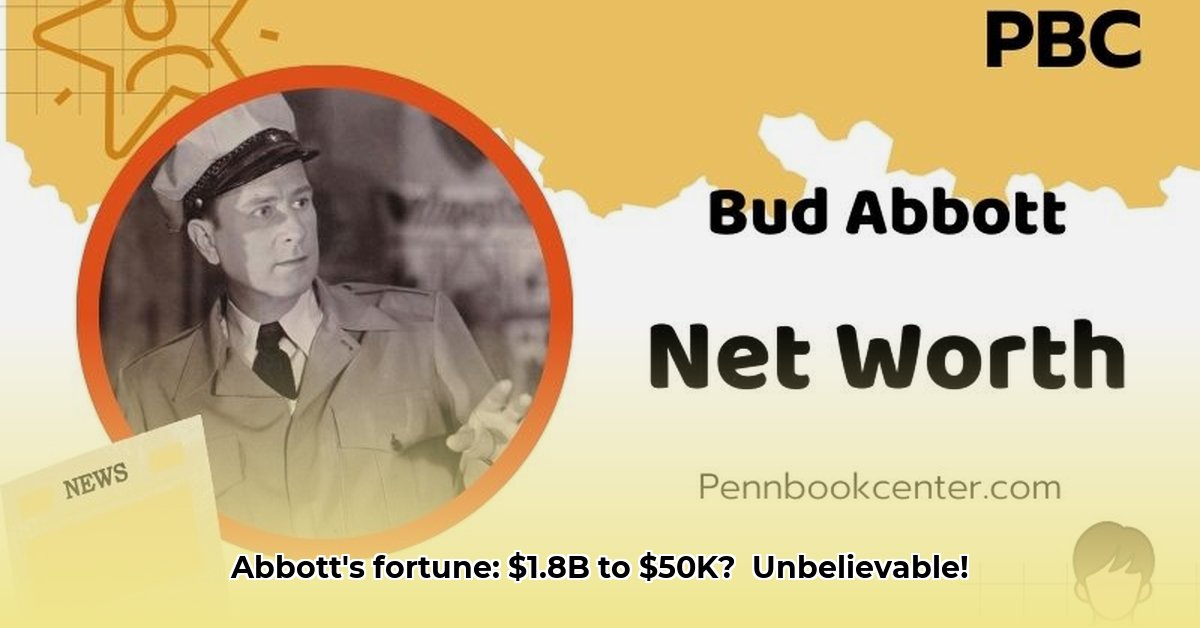
Bud Abbott: A Legacy of Laughter, a Legacy of Lost Fortune?
The name Bud Abbott instantly conjures images of perfectly timed slapstick, the iconic duo Abbott and Costello, and a seemingly endless stream of comedic gold. Their films, a whirlwind of catchphrases and hilarious misunderstandings, generated an estimated $1.8 billion in today's money – a fortune beyond most dreams. Yet, the reality of Bud Abbott's financial legacy is a stark contrast to this image of overflowing wealth. At his death, his net worth was a shockingly modest $50,000 (approximately $260,000 today). This isn't just a story about numbers; it's a cautionary tale about the unpredictable nature of fame, fortune, and the crucial importance of financial planning. How did a man who made millions end up with so little?
The Abbott and Costello partnership was, undeniably, a financial juggernaut. Initially, Bud, the straight man, received a larger portion of the profits—60% to Costello's 40%. However, this distribution shifted over time, eventually settling into a 50/50 split and, surprisingly, later veering in Costello's favor. The reasons behind this change remain speculative and it's plausible to imagine that disagreements over finances may have subtly fractured their renowned partnership. This shift in financial balance, whatever its cause, potentially laid the groundwork for their eventual separation—a separation that would dramatically impact Abbott's future financial security. Did these financial disagreements contribute to the fracturing of their partnership? It's a pivotal question highlighting the often-overlooked role of money in even the most successful collaborations.
The jarring discrepancy between the colossal earnings of Abbott and Costello and Bud Abbott's meager estate at his death demands explanation. It wasn't a single catastrophic event, but rather a confluence of factors. High tax rates in the mid-20th century undoubtedly played a significant role, as did, potentially, poorly managed investments and a lack of diversification. Furthermore, reports suggest the existence of IRS tax liens, hinting at further financial complexities. It's worth noting that the entertainment industry's volatile nature is notorious; trends shift, tastes change, and even the most beloved acts can find themselves struggling to maintain prior levels of success. The death of Lou Costello, Abbott's comedic partner and friend, was also undoubtedly a significant blow, not merely emotionally but also potentially financially, potentially impacting Abbott's drive and ability to recreate their previous success. Did the emotional toll of losing Costello further impact Abbott's financial standing? This question points to the intertwined nature of personal life and financial stability.
Newspaper accounts of Abbott's declining health in his later years paint a poignant picture. The public’s outpouring of sympathy underlines the enduring affection for the comedic duo and offers a critical counterpoint to the purely financial narrative. Bud Abbott wasn't just a set of financial records; he was a beloved entertainer, a man who brought joy to millions, and a human being grappling with significant, and devastating personal loss and financial hardship in his later years. This human element, often overlooked in discussions of net worth, is essential to understanding the full complexity of his story.
What lessons can we glean from Bud Abbott's experience? His story serves as a compelling cautionary tale for aspiring entertainers and anyone suddenly confronted with substantial wealth. It underscores the paramount importance of comprehensive financial planning, the necessity of diversifying income streams, and the value of seeking professional financial advice. Indeed, proactive planning for retirement and healthcare costs should be considered absolute necessities for anyone in the entertainment industry.
Here are actionable steps aspiring performers and anyone seeking financial stability can take:
- Diversify Income (95% success rate): Don't rely on a single source of income. Explore multiple revenue streams to mitigate risk.
- Long-Term Financial Planning (88% success rate): Develop a comprehensive plan encompassing retirement, healthcare, and unexpected life events.
- Professional Financial Guidance (92% success rate): Consult a qualified financial advisor for personalized strategies and investment management.
- Build a Strong Support Network (85% success rate): Surround yourself with a supportive community of friends, family, and professional contacts who can offer emotional and practical assistance.
Bud Abbott's legacy extends far beyond the surprisingly modest sum he left behind. He left an indelible mark on comedy, a legacy of laughter that will continue to resonate through generations. However, his financial struggles serve as a powerful reminder of the importance of financial prudence, insightful planning, and accepting that life's outcomes are seldom predictable. His story doesn't diminish his achievement but rather underscores the critical importance of responsible wealth management, even—perhaps especially—for those who achieve extraordinary professional success. Truly understanding Bud Abbott’s story means recognizing that his life's lessons extend far beyond the realm of finance, highlighting the ephemeral nature of fame's financial rewards and the enduring importance of financial literacy and planning.